
How to Heat a Greenhouse in Winter

Inside my Connecticut greenhouse heating system: calculate winter heat loss, explore the water loop and radiant floor, and watch the complete eight-part build series.
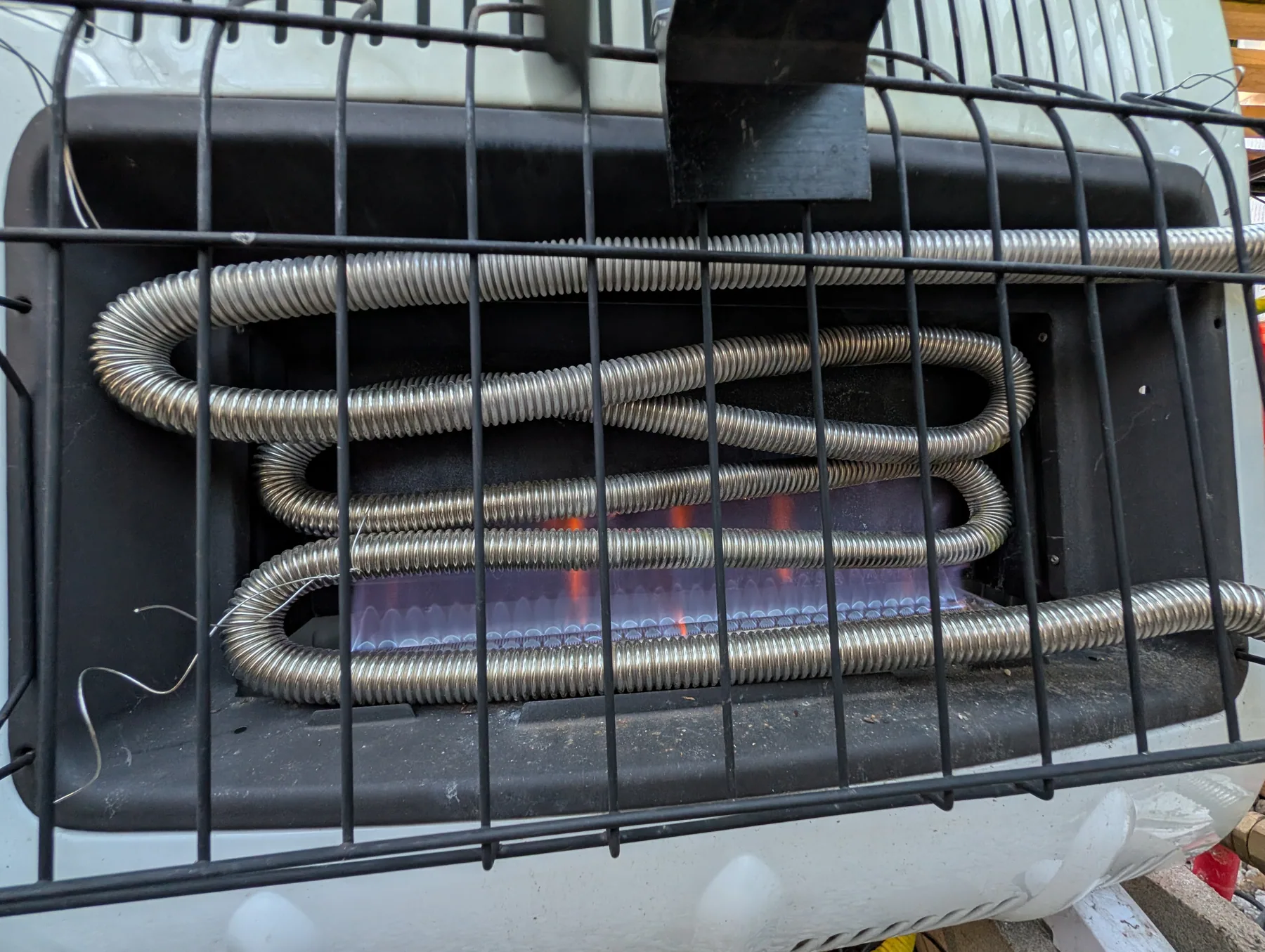
Heating a greenhouse through a Connecticut winter is not one problem—it is a chain of problems involving heat loss, air leakage, water temperature, circulation, thermal mass, fuel safety, and control. In my setup, two connected 8 × 16-foot greenhouses create a combined 256-square-foot growing space with an approximately 10-foot-3-inch peak. I use a 30,000 BTU natural-gas blue-flame heater, stainless-steel tubing as a water heat exchanger, a circulation pump, half-inch PEX in the floor, reflective insulation, and gravel to move and store heat where the plants need it.
Important: this article explains my own greenhouse heating system and the calculations I use to understand it. Gas appliances, combustion air, venting, carbon-monoxide protection, hydronic pressure relief, electrical work, and PEX temperature limits must follow the equipment manufacturer, local code, and qualified-professional guidance.
Start with the heat-loss number
A heater rating alone does not tell me whether a greenhouse will hold temperature. I first estimate how quickly heat leaves through the glazing and framing, then add an allowance for air infiltration. The interactive calculator below lets you change the structure dimensions, surface performance, indoor target, outdoor design temperature, and air changes per hour. It is an educational sizing estimate—not a site-specific heat-loss survey.
| Input | My greenhouse | Why it matters |
|---|---|---|
| Floor area | Two connected 8 × 16 ft houses; 256 sq ft combined | The floor footprint helps define the enclosure geometry and heat-storage area. |
| Peak height | About 10 ft 3 in | Taller air volume raises infiltration load and creates more room for warm air to stratify. |
| Heat source | 30,000 BTU natural-gas blue-flame heater | Nameplate input is not automatically the same as sustained heat delivered to the water or plants. |
| Distribution | Stainless heat exchanger, circulation pump, 1/2-in PEX, gravel floor | Water transports heat; PEX and gravel spread and buffer it near root level. |
The simplified conduction model is Q = U × A × ΔT, where U is the overall heat-transfer coefficient, A is exposed surface area, and ΔT is the indoor-to-outdoor temperature difference. The infiltration allowance uses the enclosed air volume and an air-change estimate. Real wind, gaps, thermal bridges, door openings, snow, ground contact, and the actual glazing assembly can change the result, so I leave room for uncertainty instead of treating one calculated number as a guarantee.
Explore my interactive greenhouse heating model
Use the controls to compare the water-side estimate with the calculated greenhouse load. The Canvas greenhouse, heat-flow display, and charts update immediately. A heating-capacity margin appears only when a verified delivered capacity is entered; the calculator does not quietly substitute the heater's nameplate rating.
Interactive water-side BTU calculator, greenhouse heat-loss estimator, animated greenhouse visualization, and comparison chart for the winter-heating guide.
What the 38,300 BTU/hr water-side result means
For moving water, I use the common field estimate:
BTU/hr = 500 × GPM × (supply temperature − return temperature)
At 7.66 GPM, 90°F supply, and 80°F return, the calculation is 500 × 7.66 × 10 = 38,300 BTU/hr. That number is an estimated water-side heat-transfer calculation. It is not an independently verified, sustained heater-output rating. Flow-meter accuracy, sensor placement, water properties, pump conditions, exchanger performance, cycling, and steady-state timing all affect the estimate. I do not use 38,300 BTU/hr as proof that a 30,000 BTU appliance continuously delivers more than its rating.
Why measured water temperatures matter
A larger supply-to-return temperature difference can mean more heat is being removed from the loop, but only when the flow measurement is reliable and the readings are taken under stable conditions. A high displayed flow paired with poorly placed temperature sensors can produce a confident-looking number that is wrong. I check that the system has reached steady operation, use consistent measurement locations, and record the values together.
How my greenhouse floor loop works
- The gas heater creates heat. My 30,000 BTU natural-gas blue-flame heater is the combustion heat source.
- Stainless-steel tubing exchanges heat with the water loop. The tubing functions as the water-side heat exchanger in my documented setup.
- The circulation pump moves the heated water. Pump flow, restriction, elevation, fittings, and the loop design affect the actual operating point.
- Half-inch PEX distributes the heat through the floor. The tubing is arranged through the floor area rather than relying only on warm air at roof level.
- Reflective insulation reduces downward loss. It helps direct useful heat toward the greenhouse instead of surrendering as much to the ground below.
- Gravel adds thermal mass. It moderates short temperature swings and spreads warmth across the walking and growing area.
This approach does not eliminate air heating. Plants, leaves, glazing, and incoming cold air still exchange heat with the greenhouse atmosphere. The floor loop gives me another distribution path and useful stored warmth low in the structure, where a purely overhead heat source can be less effective.
Watch the complete eight-part build explanation
These are the eight verified episodes already published in my official Greenhouse Heating series. Select any part to play it here, or open the complete series page for the normal video experience.
Watch the complete series
Greenhouse Heating
8 parts series on greenhouse heating
Choosing a heater size without guessing
I compare the calculated design heat loss to a verified delivered heating capacity at the conditions I expect to run. I do not compare the load to a marketing number without understanding whether that rating describes fuel input, steady delivered output, or a different test condition.
| Check | Question I ask | Action |
|---|---|---|
| Design weather | What outdoor temperature must the greenhouse hold through? | Use a realistic local winter design point, not an average daytime temperature. |
| Envelope | What are the actual glazing U-value, frame area, gaps, and exposed surfaces? | Measure the structure and improve sealing before simply adding capacity. |
| Delivered output | How much heat reaches the greenhouse under real operating conditions? | Use documented output or careful measurement; leave the field blank when it is unknown. |
| Recovery | How quickly must the space recover after a door opening or cold start? | Plan for transient loads without creating unsafe short-cycling or overheating. |
Controls, circulation, and thermal mass
The best heater cannot compensate for poor control. I want the heat source and circulation strategy to respond predictably, keep water within every component's approved temperature and pressure range, and avoid concentrating heat in one location. The floor's gravel mass smooths short changes, but it also responds more slowly than air. That lag is useful when anticipated and frustrating when ignored.
For sensitive plants, I monitor conditions at plant height instead of assuming a thermostat near the heater describes the whole greenhouse. I also look for stratification, cold edges, condensation, and frozen or stagnant sections. Sensors should be shielded from direct radiant influence and placed where the reading represents the crop environment.
Efficiency improvements I would make before adding more fuel
- Seal avoidable air leaks while preserving the combustion air and ventilation required by the appliance and code.
- Use an appropriate interior thermal curtain or night insulation strategy that will not trap unsafe combustion products.
- Reduce uncontrolled wind exposure around doors, joints, and glazing edges.
- Insulate the floor perimeter and other high-loss boundaries when the assembly allows it.
- Move air gently to reduce hot roof air and cold plant-level pockets without blasting foliage.
- Keep the glazing clean enough for winter light and control condensation so water does not damage equipment.
Troubleshooting common greenhouse heating problems
The heater runs, but the greenhouse stays cold
Recheck the actual outdoor temperature, heat-loss inputs, air leakage, fuel supply, heater condition, and whether warm air is collecting at the peak. If the calculated load is close to or above verified delivered capacity, the problem may be sizing rather than circulation.
The supply is hot, but the return barely changes
Confirm that the pump is moving water in the intended direction and that valves, strainers, air locks, restrictions, or long small-diameter runs are not preventing flow. Never service a hot or pressurized loop without isolating energy and following the equipment instructions.
The floor warms unevenly
Uneven spacing, loop length, trapped air, poor contact with the thermal mass, insulation gaps, or competing flow paths can produce hot and cold zones. Map the symptoms before changing pump speed or temperature.
Condensation increases after heating
Warm air can hold more moisture, which then condenses on cold glazing. Heat, air movement, controlled ventilation, plant watering, and disease pressure have to be managed together.
Safety checks I treat as mandatory
- Install and maintain listed carbon-monoxide alarms and follow their replacement instructions.
- Follow the heater manufacturer's required clearances, combustion-air, fuel, regulator, ventilation, and installation rules.
- Use qualified help for natural-gas, electrical, pressure, and code questions.
- Keep PEX, pumps, seals, fittings, and controls within their rated temperature and pressure limits.
- Provide the required expansion, pressure-relief, isolation, and over-temperature protections for the actual hydronic design.
- Keep combustible material, water, and electrical connections separated as required.
Exact equipment and affiliate links
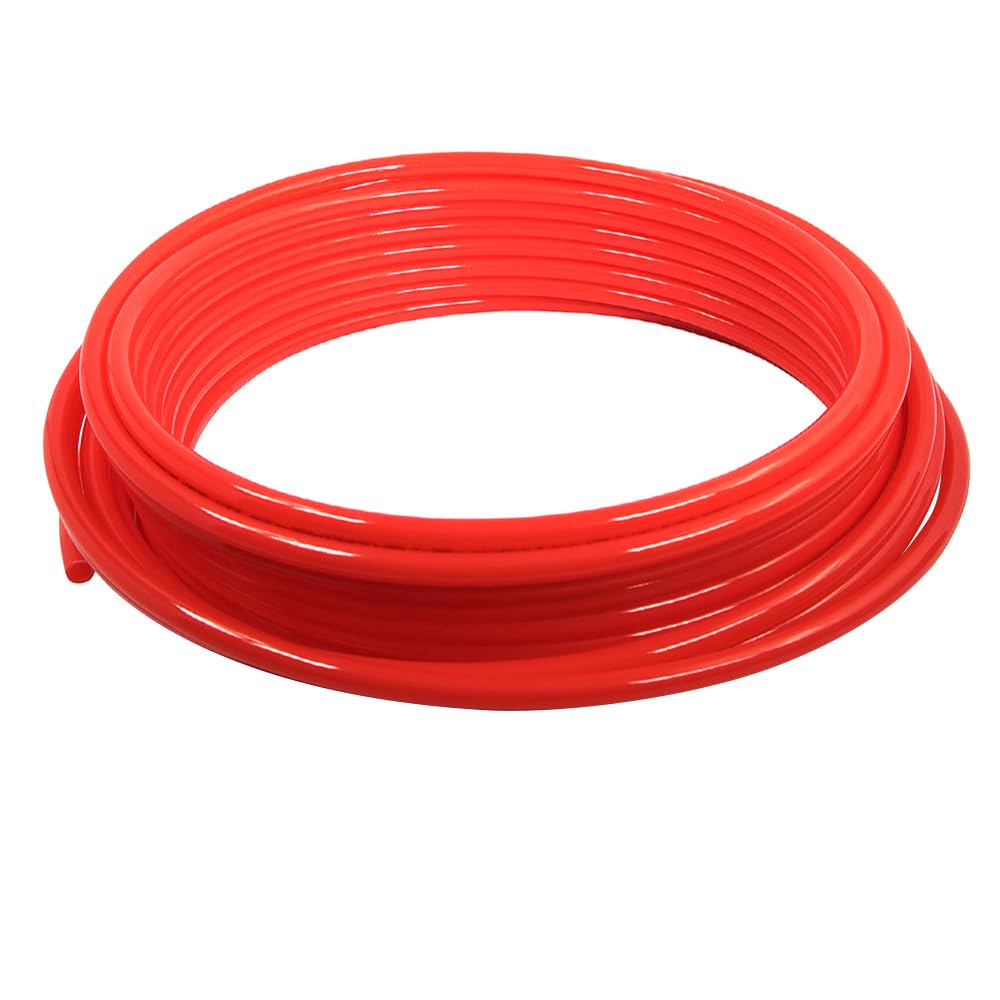
The affiliate card attached to this draft is the exact catalog match for my Mr. Heater 30,000 BTU Vent Free Blue Flame Natural Gas Heater. I have intentionally not substituted a similar pump or generic PEX listing. My exact circulation-pump model and exact half-inch PEX product still need catalog verification before those affiliate links should be added. Some links may be affiliate links; if you purchase through them, junecity may earn a commission at no additional cost to you.
Frequently asked questions
How many BTUs do I need to heat a greenhouse?
Calculate the enclosure and infiltration loss at your chosen indoor and outdoor design temperatures, then compare that load with verified delivered heating capacity. Square footage alone is not enough because glazing, height, air leakage, wind, and temperature difference can dominate the result.
Can I use a greenhouse floor as thermal storage?
A properly designed hydronic floor and gravel mass can store and distribute heat, but the tubing, insulation, controls, temperatures, pressure protection, and structural assembly must be appropriate. Thermal mass slows both heating and cooling; it does not create energy.
Is 38,300 BTU/hr the output of my heater?
No. It is the estimated water-side result from 500 × 7.66 GPM × 10°F. It is not an independently verified sustained heater-output measurement.
Should I copy this gas-and-water setup exactly?
No. Use it as an educational look at my documented system and calculations. A qualified professional and local code authority should evaluate combustion, fuel, ventilation, electrical, hydronic, pressure, and fire-safety requirements for your property.
Keep exploring
Browse my complete greenhouse heating video series, visit the junecity blog for more practical greenhouse projects, and use the interactive model above to compare your own dimensions and winter conditions before deciding what equipment belongs in your plan.
Keep exploring
Find more Junecity guides
Browse practical gardening, outdoor living, and DIY articles.Browse the blogShop this guide
Affiliate Picks
Tools & supplies I use and recommend


As an affiliate, junecity.studio may earn from qualifying purchases at no additional cost to you.
Keep growing
Suggested reading

Tomorrow Decides Who Wins the Lemon Tree 🍋
Explore the strategy behind winning a lemon tree in a competitive treasure hunt. Learn tips for caring for your own lemon plants and optimizing their growth.

The Garden Didn’t Get the Memo That Summer Is Over 😂🍅🌶️
Even as September rolls in, your garden keeps delivering a bountiful harvest. Discover tips for managing late-season crops and ensuring your vegetable garden thrives well into fall.
0 comments
Comments (0)
We love hearing from our community. Share your thoughts, questions, or experience.
Have something to add?
Log in to post, react, share images, and join threads.
Newest First
All Comments
Showing 0-0 of 0
Start the conversation.
Questions and first-hand experience are welcome here.