
Junecity plant care
Black Raspberry
Rubus occidentalis
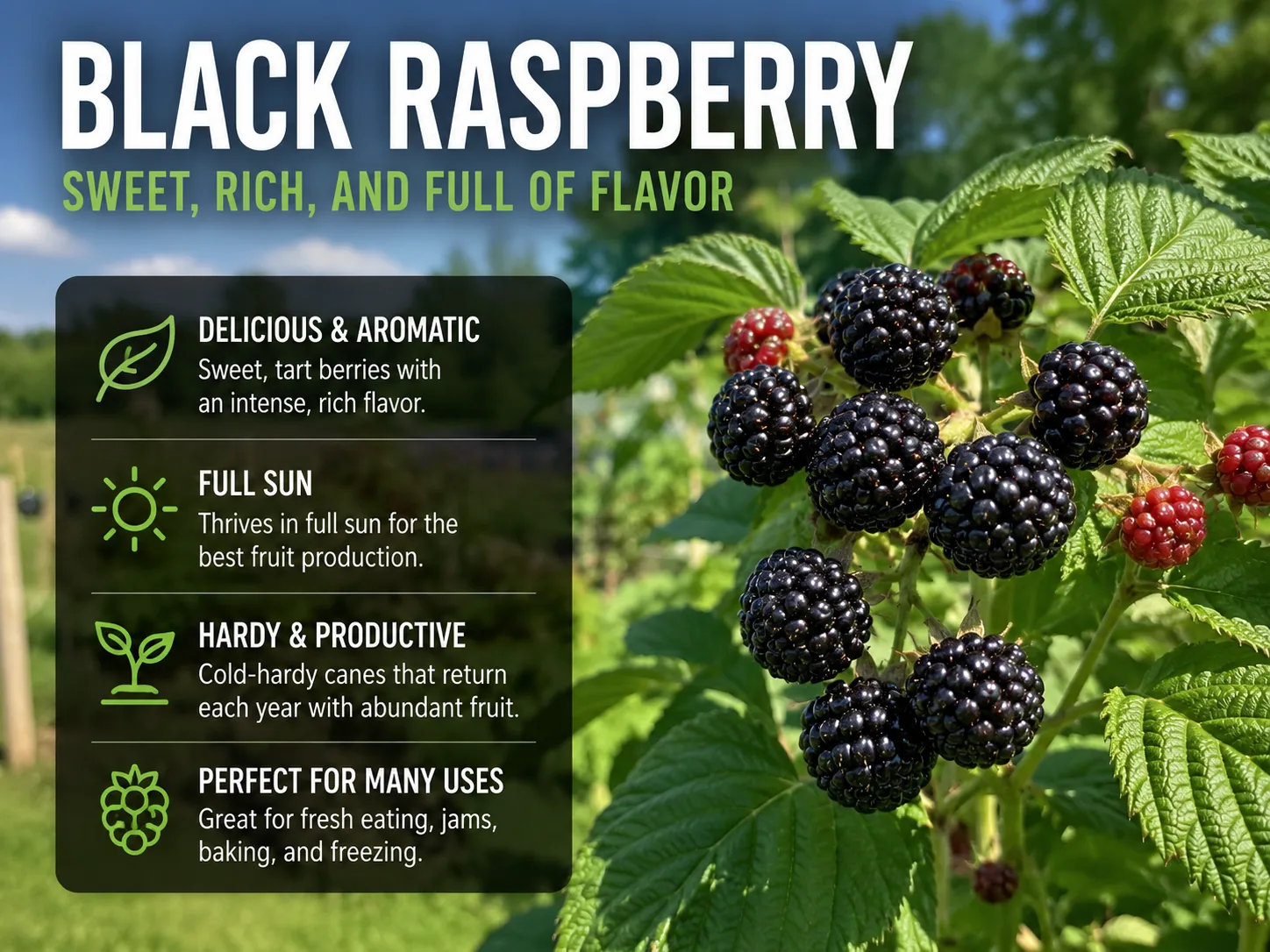
Black raspberries are a delicious and nutritious fruit that can be easily grown in home gardens. They thrive in sunny locations and require proper care to produce a bountiful harvest. With their sweet flavor, they are perfect for fresh eating, desserts, and preserves.
Growing zones
USDA Zones 5-8, with some cultivar variation. Check specific cultivar recommendations for best results.
Sun
Full sun is ideal, requiring at least 6-8 hours of direct sunlight per day.
Water
Keep the soil consistently moist but not waterlogged. Water deeply once a week, increasing frequency during hot, dry spells.
Soil
Fertile, well-drained soil with a pH of 5.5 to 6.5 is preferred. Amend with organic matter to improve soil structure and fertility.
Spacing
Space plants 2-3 feet apart in rows that are 6-8 feet apart to allow for growth and air circulation.
Mature size
Typically reaches 3-4 feet in height and 2-3 feet in width.
Planting season
Spring is the best time to plant black raspberries, after the last frost date.
Fertilizing
Apply a balanced fertilizer in early spring as new growth begins. Follow package instructions for application rates.
Pruning
Prune in late winter or early spring to remove dead or weak canes and to encourage new growth. Thin out canes to maintain good air circulation.
Winter care
In colder climates, mulch around the base of the plants to protect roots from freezing temperatures. Consider covering plants with burlap or frost cloth during extreme cold.
Common problems
No additional guidance has been published yet.
People and pet safety
Black raspberries are generally considered safe for consumption by people and pets. However, verify with a trusted authority for specific concerns.