
Gardening
Bring Houseplants Indoors: The Debug Checklist (Before the First 50°F Night)
Sep 28, 2026
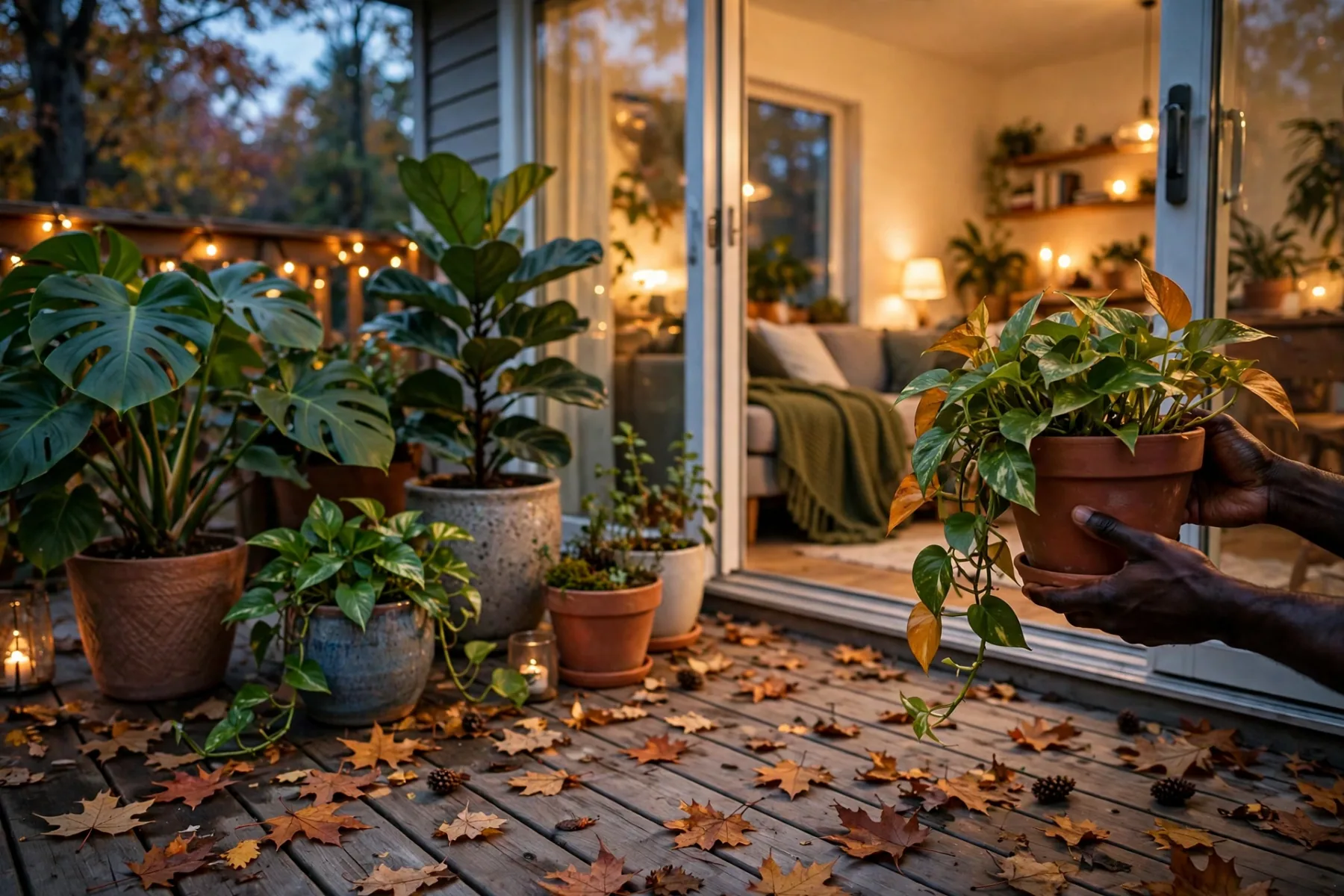
When nights start dipping into the low 50s, your houseplants need to come inside. But the cold isn't what kills them — it's what they bring in with them. After a summer outdoors, every pot is carrying hitchhikers: spider mites, mealybugs, scale, fungus gnat larvae. Bring them in untreated and you'll be fighting an indoor infestation by Thanksgiving. This is the debug checklist I run on every plant before it crosses the threshold — about 90 minutes for a whole collection, and your indoor jungle stays clean all winter.
Know your enemy: 4 hitchhikers to ID
Before you touch a spray bottle, learn what you're looking for. These four cause 90% of indoor infestations, and each one hides differently.
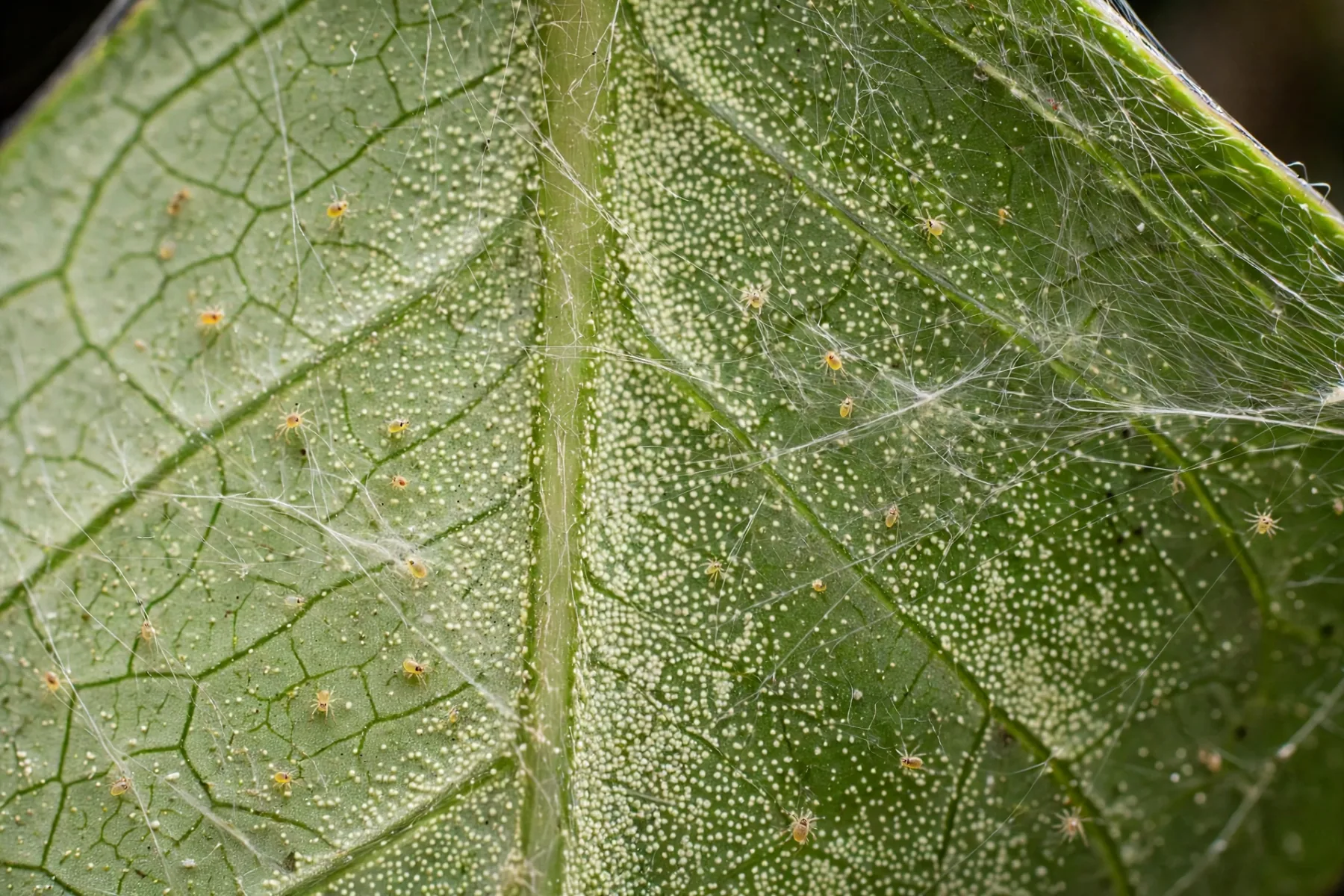
Spider mites — The invisible ones. They're the size of dust specks, so you'll see their damage first: fine, silky webbing stretched across the undersides of leaves, and tops that look stippled and dusty. Confirm with the tap test: hold white paper under a leaf and tap — moving specks mean mites. They love dry air, which is why they explode once the heat comes on indoors.
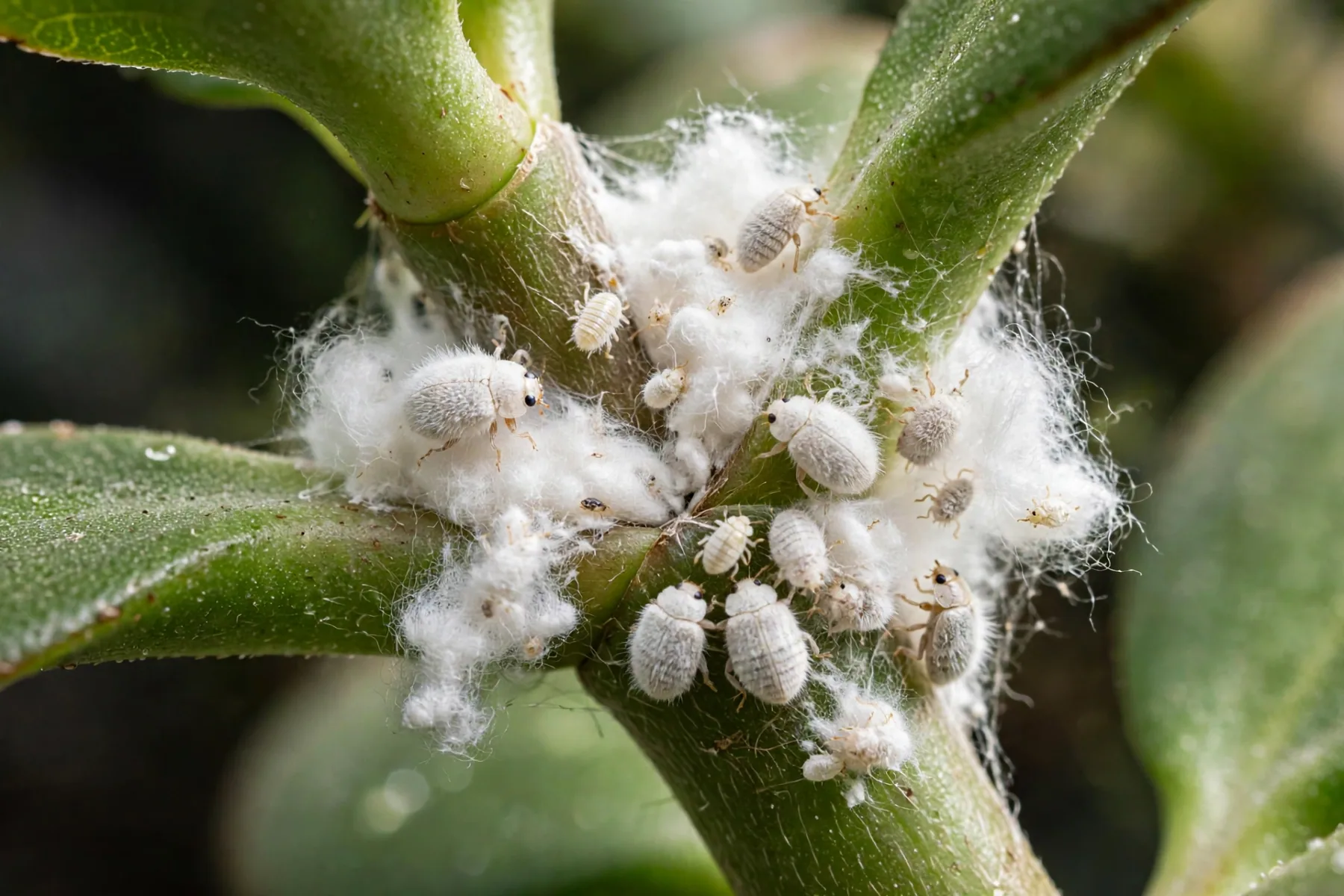
Mealybugs — The cotton clusters. White, waxy, cottony masses tucked into leaf joints, stem creases, and leaf undersides — it looks like cotton fluff that doesn't blow away. The giveaway is sticky honeydew dripping onto the leaves below them. They spread plant-to-plant fast, so one infested plant can seed a whole collection.
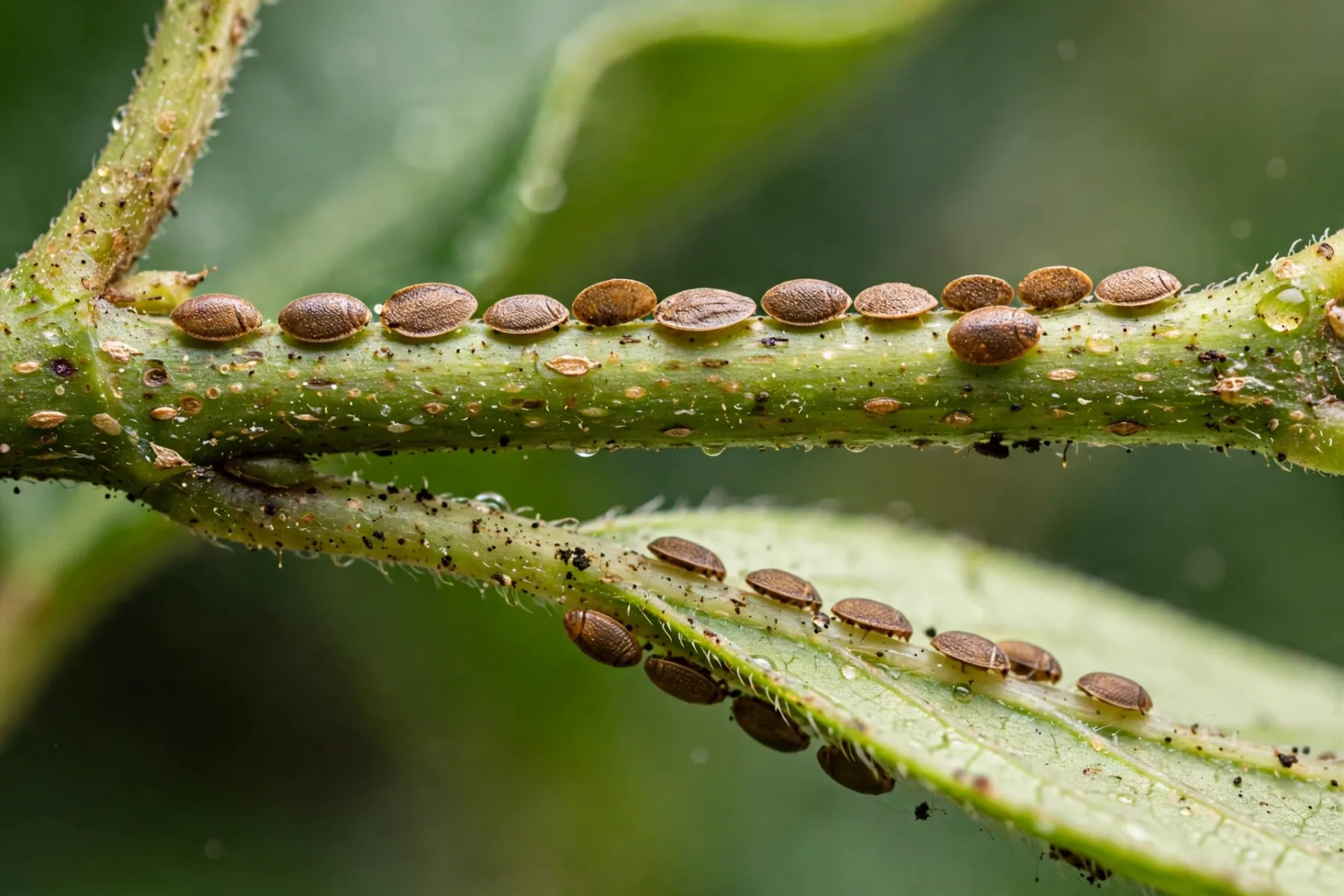
Scale — The bumps. Small brown or tan oval bumps stuck along stems and leaf undersides. They look like part of the plant until you flick one off with a fingernail. Their waxy armor shrugs off most contact sprays — which is exactly why the smothering oil step below matters.
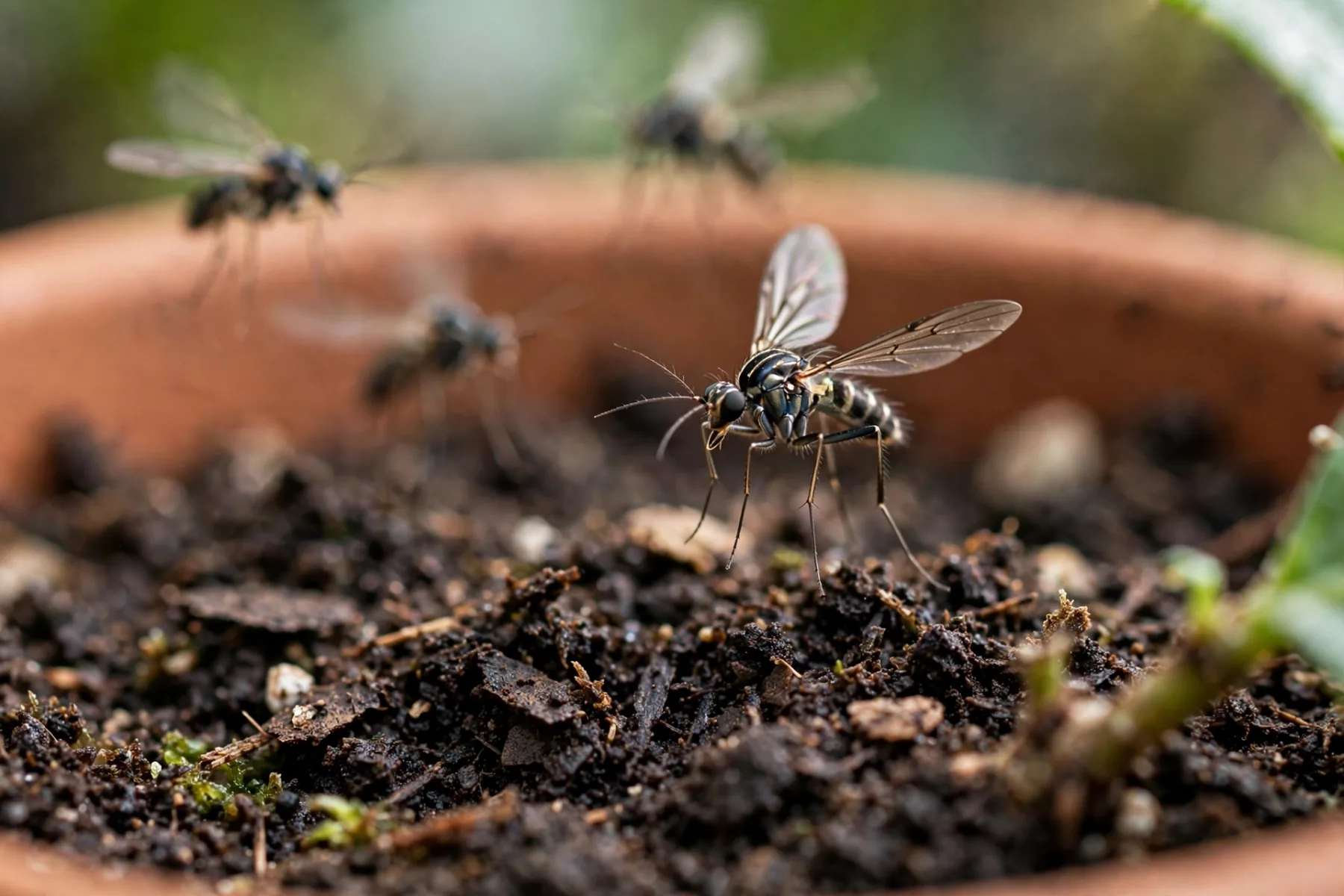
Fungus gnats — The tiny flies. Small black flies hovering just above the soil. The flies are only annoying — the real damage is the translucent larvae chewing root hairs in the top inch of soil. If you see flies, larvae are already there.
What you'll need
Horticultural oil or insecticidal soap, neem oil concentrate, a 5-gallon bucket, a spray bottle, a small watering can, and a grow light for the indoor transition.
The steps
- Inspect every plant — and I mean every leaf. Work in good light. Check the undersides of leaves, leaf joints, stems, buds, and the soil surface. Run the tap test for mites on any plant that looks dusty or stippled. Check new growth first — pests colonize the tender stuff. Any plant with signs goes into a separate 'treat first' group, away from the clean ones.
- Prune and clean. Strip every dead and yellowing leaf — they're pest hotels. Wipe the remaining foliage top and bottom with a damp cloth; dust blocks light and hides mites. Scrape off and discard the top inch of soil, where fungus gnat larvae live. If you use pruners, wipe the blades between plants so you don't carry mealybugs from one to the next.
- Run the dunk test. Fill a bucket with lukewarm water and submerge each pot right up to the rim for 10–15 minutes. Ants, larvae, eggs, and anything living in the root ball flush out or drown — you'll see them come up. (Skip the dunk for succulents and cacti; just replace their top dressing.) Then let every pot drain completely — roots sitting in water rot fast once they're indoors with less airflow.
- Spray everything down. Mix horticultural oil or insecticidal soap exactly per the label and coat the whole plant: tops and undersides of every leaf, stems, crevices, everything. Oil works by smothering — that's what kills the armored scale and mite eggs that sprays miss. Do it in the evening or full shade, never in direct sun, or wet oil can burn leaves. Test-spray one leaf and wait a day on anything delicate like ferns or thin-leafed begonias. Plan a second pass in 7–10 days to catch anything that hatches after the first.
- Drench the soil with neem. Mix neem oil concentrate per the label and water it through until it drains from the bottom. This hits the larvae and eggs the dunk missed, living deeper in the root ball. It's the step most people skip — and it's exactly why the gnats 'come back' every January. Repeat once more two weeks later for a clean break in the breeding cycle.
- Set up the indoor station. Indoor light is a fraction of outdoor sun, and short fall days make it worse. Hang a grow light 6–12 inches above the foliage and run it 12–14 hours a day on a timer — morning and evening fill works fine. Group plants together or set pots on pebble trays for humidity, and keep everything clear of heat vents and drafty windows, which stress plants and invite mites.
- Quarantine for two weeks. Keep the new arrivals in a separate room — or at least across the room — from your existing indoor plants for a full 14 days. Re-inspect weekly: undersides, joints, soil. If anything hatches, you repeat the spray on that one plant instead of fighting it across your whole collection.
Safety
Always mix sprays at label rates — more is not better and can burn foliage. Don't spray stressed, wilted, or drought-dry plants; water them a day ahead instead. Keep treated plants away from pets and kids until fully dry. Horticultural oil and freezing temperatures don't mix — finish this whole job before the real cold hits, and never spray when nights will drop near freezing.
Project builder
Bring Houseplants Indoors: The Debug Checklist (Before the First 50°F Night)
Time
90 minutes
Budget
$30–$60
Skill
Easy
Progress
0%
Visual timeline
Build it in 30-minute moments.
3 color segments x 30 min
5 min
Inspect every leaf — undersides, joints, soil surface
20 min
The dunk test — flush the soil
35 min
Spray horticultural oil, tops and undersides
50 min
Neem soil drench for larvae and eggs
1 hr 5 min