
Greenhouse
How to Winterize Your Greenhouse Before the First Frost
First frost is 2 to 4 weeks out. Here is the simple setup that keeps a greenhouse warm all winter: a small heater, a thermostat controller, and a few cheap layers. About two hours of work, and your plants never notice the cold.
Sep 28, 2026
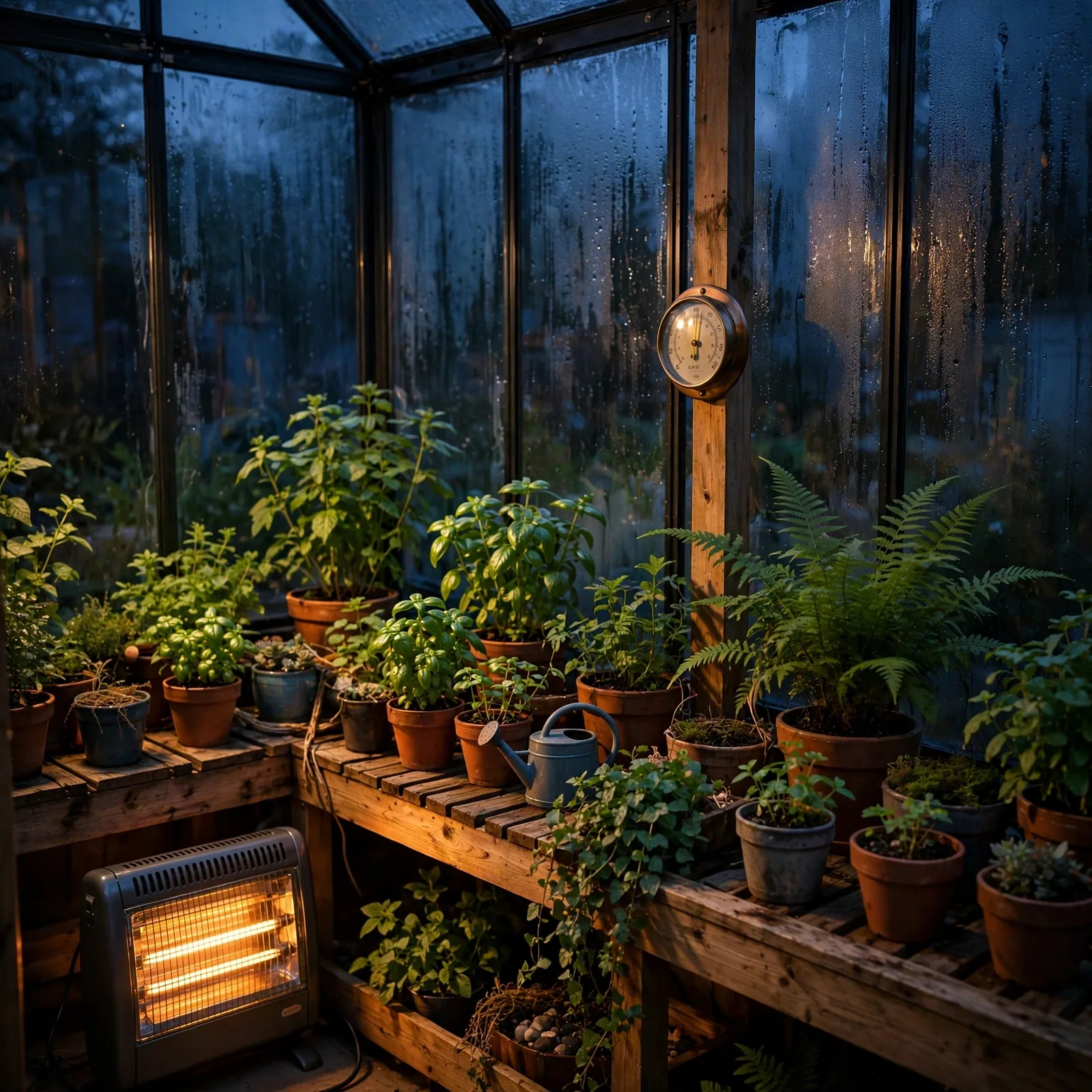
First frost is coming, and a greenhouse only protects your plants if you set it up for the cold. This is the exact winterizing setup I run in two Connecticut greenhouses: a small heater, a thermostat controller, and a few cheap layers. About two hours of work and roughly a hundred dollars, and your plants never notice winter.
What you'll need
A 1500W electric greenhouse heater (VEVOR or Bio Green Palma), an Inkbird ITC-308 digital temperature controller, 6-mil clear polyethylene sheeting, frost cloth or a freeze protection kit, and a min/max thermometer. For tools: a utility knife or scissors, a tape measure, and zip ties.
The steps
- Clear out and inspect. Pull every dead plant and spent crop out of the greenhouse first — they harbor pests and shade the plants you want to keep. While you're in there, check every panel, vent, and door seal for gaps. Heat escapes through the cracks you can't see, so run a hand around the frames on a breezy day and note where the drafts are.
- Seal the drafts. Patch the gaps you found with 6-mil polyethylene sheeting, cut to size and fastened with zip ties. A ten-dollar patch job can save fifty dollars of heat over a winter, and it takes less than half an hour.
- Place the heater. Set a 1500W electric greenhouse heater on the floor in a central spot, where the warm air rises evenly around the benches. Keep at least 3 feet of clearance from plants, pots, and any water source — the fan needs room and the foliage doesn't want hot air blasting it. For a larger greenhouse, the 30,000 BTU vent-free natural gas heater in the product list below is the step-up option.
- Wire in the thermostat controller. Plug the heater into a digital temperature controller like the Inkbird ITC-308 and set it to kick on at 50°F. This is what keeps the electric bill sane: heat only runs when the greenhouse actually needs it, instead of roasting all night.
- Add a second layer. Drape frost cloth over your most tender plants for insurance on the coldest nights. It buys you a few extra degrees right where it matters and costs almost nothing.
- Add light as days shorten. Hang supplemental LED grow bars over the benches so short days don't stall growth. Even a couple of hours of extra light in the morning and evening keeps everything growing through December.
- Test it overnight. Set a min/max thermometer inside the greenhouse and check it at dusk and dawn. Adjust the controller until the overnight low holds above 45°F, then leave it alone — the system runs itself from here.
Safety
Keep heaters clear of water and foliage, and don't overload the circuit — a 1500W heater ideally gets its own dedicated outlet. If you use a propane backup heater, it MUST have ventilation: crack a vent so exhaust gases can't build up inside.
Project builder
How to Winterize Your Greenhouse Before the First Frost
First frost is 2 to 4 weeks out. Here is the simple setup that keeps a greenhouse warm all winter: a small heater, a thermostat controller, and a few cheap layers. About two hours of work, and your plants never notice the cold.
Time
2 hours
Budget
$120-$200
Skill
Easy
Progress
0%
Visual timeline
Build it in 30-minute moments.
4 color segments x 30 min
5 min
Clear out and inspect — pulling spent plants
25 min
Seal drafts — polyethylene sheeting on window frame
40 min
Heater placed on greenhouse floor between benches
50 min
Thermostat controller close-up — set to 50°F
1 hr
Draping frost cloth over tender plants
1 hr 20 min
Supplemental LED grow bars over the benches
1 hr 35 min
Setting the thermostat controller — plug the heater in
1 hr 50 min