
Bypass vs. Anvil Pruners: Which One Should You Use on Your Plants?

Bypass vs. anvil pruners, explained simply: which one cuts live wood cleanly, which suits dead wood, and how to prune without crushing stems.
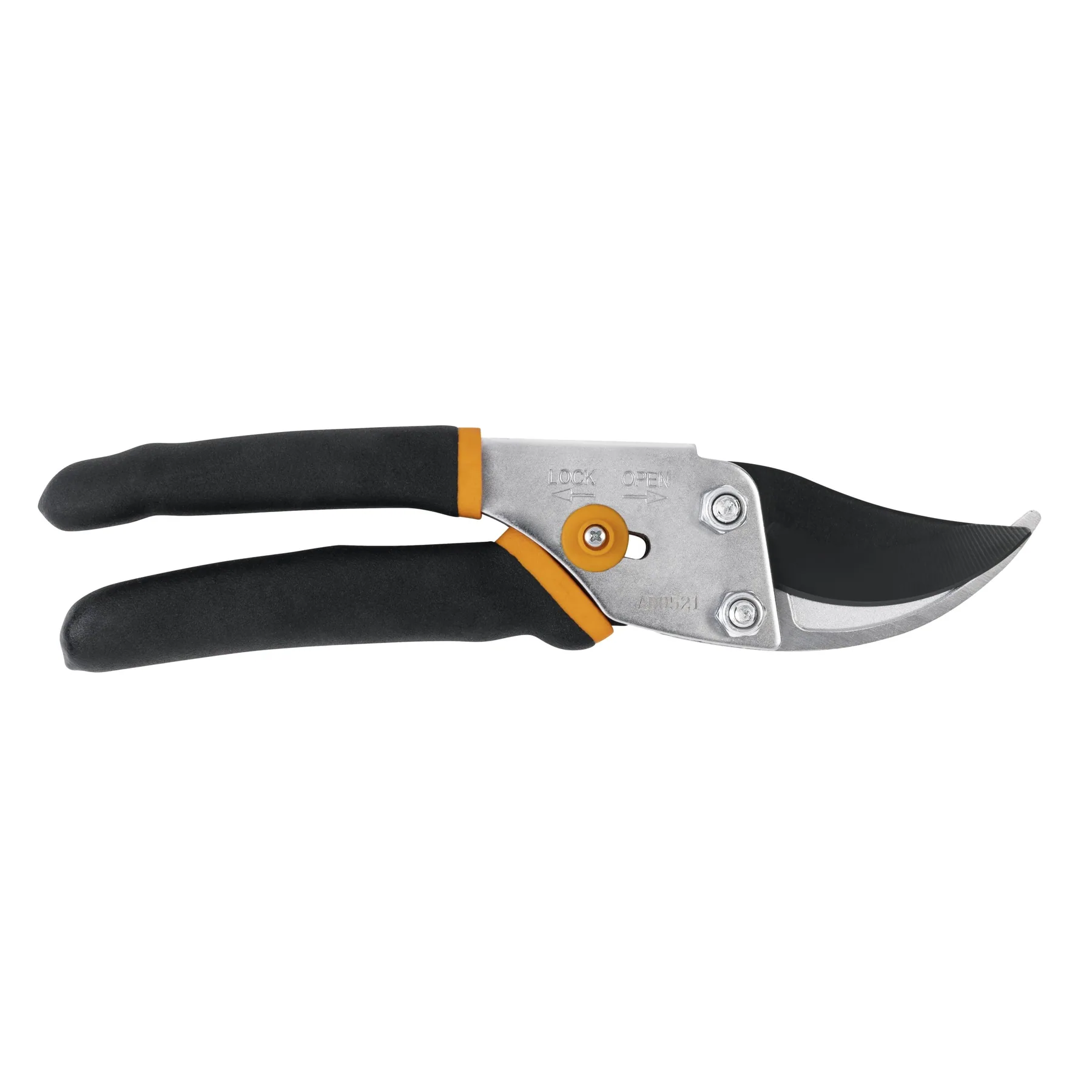
If you only buy one pair of pruners, buy bypass pruners.
That is the short answer. For almost everything alive in a home garden — a grapevine cane, a fig shoot, a rose stem, a young apple branch — a bypass pruner makes the cleaner cut. An anvil pruner still has a job, but it is narrower: dead wood.
Below: how each works, how to cut cleanly, and what to do for fruit trees, grapevines, cuttings, and blade care.
[Image: Side-by-side diagram of a bypass pruner and an anvil pruner, with arrows showing how each blade meets the stem]
How each pruner works
Bypass pruners work like scissors. One curved, sharp blade slides past a broader, unsharpened blade, and the stem is sliced between them.
Anvil pruners work like a knife on a cutting board. One straight blade closes onto a flat plate, called the anvil, and the stem is pressed and severed against it.
On living wood, slicing beats pressing. Maryland Extension states bypass pruners are superior because they reduce tearing or crushing of tissues; Minnesota Extension agrees, noting bypass blades have a cleaner cut while anvil blades can "pinch" the branch.
A crushed stem heals poorly, while a smooth cut seals more easily.
Remember this rule:
- Living, green, or flexible wood: bypass.
- Dead, dry, brittle wood: anvil is fine, and sometimes easier.
- Not sure if it is alive? Scratch the bark lightly. Green underneath usually means living tissue — reach for the bypass pruners.
Bypass vs. anvil at a glance
FeatureBypass prunersAnvil prunersHow it cutsCurved blade slides past a broader blade, like scissorsStraight blade closes onto a flat plateBest forLive, green, and flexible woodDead, dry, and brittle woodCut quality on live woodClean slice, less tearing and crushingTends to pinch and crush living tissueFlowers and soft stemsYes — the usual first choiceNo — the crush harms soft stemsDead canes and dry twigsWorks fineYes — where anvil earns its keepHand-pruner branch sizeUp to about 3/4 to 1 inchSimilar range; do not force larger woodWhen dullTears and drags, leaving ragged edgesMashes and flattens the stem before cuttingSharpeningSingle-beveled blade; follow its existing bevelDouble-beveled blade; follow its existing bevelBeginner pickYes — buy this one firstBuy second, only if you clear a lot of dead woodWhich pruner should you buy first?
Start with bypass pruners that fit your hand. Too large, and your hand tires and cuts get sloppy. Too small, and the blades will not open wide enough. Hold the tool, open and close it a few times, and check you can lock it safely with one hand.
A solid everyday example is the Fiskars Bypass Pruning Shears. The manufacturer description lists precision-ground steel blades, a self-cleaning sap groove to keep blades from sticking, a non-slip grip handle, and a cut capacity of up to 5/8 inch in diameter. That 5/8-inch figure matters: even a good hand pruner has a ceiling, and branches near or above that size belong with loppers or a saw.
No price, star rating, or performance claim is made here, because none was verified as current for this draft — check the linked listing before you buy, and choose on fit, blade quality, and replacement parts.
An anvil pair is an optional second purchase, not an upgrade.
How to make a clean cut, step by step
Step 1: Look before you cut. Walk around the plant. Remove the three D's first: dead, damaged, and diseased wood. Then look for crossing branches that rub, inward-growing shoots crowding the center, and vigorous vertical shoots, often called watersprouts. Step back after every few cuts.
Step 2: Match the tool to the branch. Up to about 5/8 to 3/4 inch: bypass hand pruners. About 3/4 inch to 1 1/2 or 2 inches: bypass loppers, for leverage. Larger: a pruning saw. If a hand pruner will not close comfortably around a branch, do not force it — forcing crushes the stem and dulls the blade.
Step 3: Place the blade correctly. Put the sharp blade on the side you are keeping and the hook on the side you are discarding, so the cleanest face stays on the living plant. Maryland Extension advises moving the blade side up and through or across the branch, since moving it down can cause tearing. Open the blades fully, seat the branch deep in the jaw, and squeeze in one smooth motion.
Step 4: Cut just above a bud or branch collar. For a small stem, cut about a quarter inch above an outward-facing bud, angled so water sheds away from it. Too far above leaves a stub that dies back; too close can damage the bud. For a branch off a larger limb, find the branch collar — the swollen ring where branch meets larger wood — and cut just beyond it and the branch bark ridge. Iowa State Extension warns against flush cuts tight to the trunk, which remove the collar the tree uses to seal the wound. For a heavy limb, use the three-cut method: undercut one-third through from underneath, about 12 inches out; saw down from the top a few inches farther out until the branch drops; then remove the stub just outside the collar.
Step 5: Clean up as you go. Bag diseased prunings. Stand back when you think you are done — a good job looks open and airy, not hacked. Unsure about one more branch? Leave it.
[Image: Diagram of the three-cut method on a heavy limb, showing the undercut, the top cut, and the final cut just outside the branch collar]
Pruning fruit trees
In Connecticut, most dormant pruning of apples, pears, peaches, and plums happens in late winter, after the coldest weather and before buds break, when the leafless tree's structure is visible. Use bypass pruners for small wood, bypass loppers for mid-size branches, and a saw for larger wood. Work in order: remove the three D's, cut back to healthy wood; remove crossing and rubbing branches, keeping the better-placed one; open the center so light reaches inner branches; shorten long branches back to a well-placed side branch, rather than shearing the top flat.
Do not remove more than about a quarter of a tree's canopy in one year — spread an overgrown tree's renovation over two or three winters. Do not paint or seal cuts: wound dressings inhibit sealing and do not prevent decay.
Pruning grapevines
Grapevines are pruned harder than almost any other fruit plant, and almost entirely with bypass tools. Dormant pruning usually happens in late winter, before bud swell. Remove dead, damaged, and diseased wood first, then look at the framework: trunk, cordons (horizontal arms), and fruiting canes. Keep the well-placed framework, keep one or two healthy canes near each cordon as renewal wood, thin the rest so remaining canes are spaced along the wire rather than tangled, and shorten what you keep to a bud count suited to your vine's vigor. When in doubt, prune lighter and watch the response.
Every one of those cuts should be a bypass cut — canes are living wood even when they look brown and woody. Use bypass hand pruners up to about three-quarters of an inch, bypass loppers for thicker canes, and a saw only for an old trunk or large dead cordon.
[Image: A grapevine on a trellis before and after dormant pruning, with retained canes tied to the wire and removed canes shown separately]
Propagation cuttings
A cutting is a stem asked to grow roots from a wound, so a crushed end struggles from the start. For figs, grapes, elderberry, and many shrubs, use sharp bypass pruners or a sharp knife — never an anvil pruner on living cutting wood. Make the bottom cut just below a node, where roots are most likely to form, in one smooth motion, and clean blades between plants.
For garden knives that pair well with pruners, see the Junecity Studio guide — a draft cross-link to activate on publication: What Is a Hori Hori Knife? (do not link /blog/what-is-a-hori-hori-knife live yet). A hori hori is a digging and weeding knife, not a replacement for a bypass cut.
Blade care: sharpening, cleaning, and oiling
Sharpening. Follow the existing bevel — bypass blades are single-beveled, anvil blades double-beveled, at about 10 to 20 degrees. Sharpen in one direction along the bevel, remove any burr with a very light pass, and test on a green twig. Sharpen little and often.
Cleaning and disinfecting. Remove dirt and debris first, then dip or spray with disinfectant and air dry. Soap and water handle routine sap. For disease prevention, Maryland Extension recommends 70 percent alcohol, or bleach diluted one to nine, between cuts when infection could spread. Bleach corrodes metal, so rinse it off; alcohol evaporates and needs no rinsing. Avoid vinegar — Minnesota Extension notes it can contribute to rust. Disinfect between plants and always after a diseased cut. Carrying two pruners helps: let one soak while you cut with the other.
Oiling and storing. Dry the tool completely after cleaning — moisture is the fastest route to rust. Minnesota Extension recommends a light oil coating on blade, bolts, and springs. Store pruners dry, closed and locked, out of the weather; in a humid Connecticut greenhouse, a dry toolbox beats a damp bench. Light rust can be removed with steel wool; heavy pitting usually means the tool is done.
[Image: Step-by-step blade-care diagram — cleaning sap from a blade, sharpening along the bevel, and oiling the pivot]
Common mistakes and troubleshooting
Anvil pruners on live wood is the most common mistake — move live cuts to bypass pruners. Forcing an oversized cut damages plant, blade, and tool: switch to loppers or a saw. Stubs die back, while flush cuts remove the branch collar: cut just above a bud, or just outside the collar. Topping a tree or shearing a shrub flat produces weak shoots: prune selectively, branch by branch. Wrong timing costs blooms: spring-flowering shrubs bloom on last year's wood, so prune them just after blooming. Heavy pruning on a stressed plant sets it back: remove only dead and diseased wood until it recovers.
Troubleshooting: a crushed, pale cut points to an anvil pruner on live wood or a dull bypass blade — sharpen and switch tools. Bark torn below a cut usually means a heavy limb was removed without the three-cut method. A sticking pruner usually has sap buildup or a worn pivot — clean the sap groove and oil the pivot.
Recommended tools and shopping list
- Fiskars Bypass Pruning Shears (ASIN B00002N66H) — Everyday bypass pruner for live stems and small branches; manufacturer description lists precision-ground steel blades, a self-cleaning sap groove, a non-slip grip, and 5/8-inch cut capacity. No price or rating is stated here, because no current figure was verified for this draft.
- Bypass loppers, long-handled — For branches roughly 3/4 inch to 1 1/2 or 2 inches; long handles give leverage. Choose bypass style for live wood.
- Folding pruning saw — For branches larger than loppers can handle, and for an old grapevine trunk or dead cordon. A folding blade is safer to carry.
- Diamond sharpening stone or pruning-blade file — For keeping the bypass edge keen; follow the existing single bevel.
- Tool-cleaning supplies: stiff brush, soap, and 70% isopropyl alcohol with a spray bottle — For sap and soil after a session, and disinfecting between plants and after diseased cuts.
- Light lubricating oil for blades and pivots — A light coat after cleaning prevents rust and keeps the pivot smooth through a humid Connecticut winter.
- Leather gardening gloves — For grip, blister prevention, and protection from thorns, rough bark, and sap.
Starter kit, in order: bypass pruners, sharpener and alcohol spray, loppers, folding saw, gloves and oil.
[Image: Flat-lay diagram of a pruning kit — bypass pruners, loppers, folding saw, sharpener, spray bottle, oil, and gloves, each labeled]
Frequently asked questions
Should I buy bypass or anvil pruners? Bypass first — it cuts live wood cleanly, which is most of what you cut. Anvil second, only if you regularly clear dead, dry wood.
Can I use anvil pruners on live plants if they are sharp? A sharp anvil pruner beats a dull one, but it still presses tissue against a flat plate. For live wood, bypass is still better.
What size branch can hand pruners handle? Most handle up to about 3/4 to 1 inch; the featured Fiskars model is described with a 5/8-inch capacity. If you must force it, switch to loppers or a saw.
Should I seal pruning cuts? Generally no — clean cuts left open seal better than coated ones.
When do I prune fruit trees and grapevines in Connecticut? Mostly in late winter, after the coldest weather and before buds break. Dead, damaged, and diseased wood can come out any time. Spring-flowering shrubs are the exception: prune just after they bloom.
How often should I sharpen? Little and often — a few light strokes after a session keep the edge. If a pruner bends or tears a green twig, sharpen before the next cut.
How do I disinfect between plants? Wipe or spray with 70 percent isopropyl alcohol, or bleach diluted one to nine and rinsed afterward, since bleach corrodes metal. Clean dirt and sap off first.
The bottom line
Bypass pruners are your everyday tool. Anvil pruners are your dead-wood specialist. That one distinction gives cleaner cuts and healthier plants than any other single pruning habit.
Start with sharp bypass pruners, such as the Fiskars Bypass Pruning Shears, learn the blade placement and branch-collar rule, keep the blade clean and sharp, and step up to loppers or a saw when the branch outgrows the tool.
If this guide helped, explore more practical gardening guides at Junecity Studio, and look for the companion guide — a draft cross-link to activate on publication: What Is a Hori Hori Knife? (do not link /blog/what-is-a-hori-hori-knife live yet).
Affiliate disclosure
As an Amazon Associate, Junecity Studio may earn a commission from qualifying purchases made through links on this page, at no additional cost to you. Recommendations here are made because the tool type is useful for the task described, not because of the commission. No price, star rating, or performance claim is stated unless verified in the research for this article. Products listed without a link are marked for verification in the affiliate link manager before publishing.
Further reading / Sources
Only sources verified via search in this job are listed; no study, statistic, or URL has been invented here.
- University of Maryland Extension, "Pruning Tools" (updated February 28, 2023): bypass vs. anvil mechanics, sharp cuts, disinfecting, and branch-size limits. https://extension.umd.edu/resource/pruning-tools
- University of Minnesota Extension, "Caring for winter pruning tools": blade types, size ranges, bevel sharpening (10–20 degrees), cleaning, and oiling. https://blog-fruit-vegetable-ipm.extension.umn.edu/2024/12/caring-for-winter-pruning-tools.html
- University of Minnesota Extension, "Clean and disinfect gardening tools and containers": cleaning before disinfecting, and disinfectant options. https://extension.umn.edu/es/node/29456
- Iowa State University Extension, "Where should the pruning cut be made when removing a branch?": cutting beyond the branch collar and bark ridge. https://yardandgarden.extension.iastate.edu/faq/where-should-pruning-cut-be-made-when-removing-branch
- Virginia Cooperative Extension, Gardener Handbook, Chapter 14: Pruning: the three-part cut, and why wound dressings generally inhibit sealing. https://pressbooks.lib.vt.edu/emgtraining/chapter/14/
- Fiskars Bypass Pruning Shears product description (via Amazon listing for ASIN B00002N66H): steel blades, sap groove, non-slip grip, 5/8-inch capacity. Tracked link: https://www.amazon.com/dp/B00002N66H?tag=andreferrei04-20
Editor note: re-check the live Fiskars listing before publishing; do not add a price or rating without fresh verification.
Keep exploring
Find more Junecity guides
Browse practical gardening, outdoor living, and DIY articles.Browse the blogShop this guide
Affiliate Picks
Tools & supplies I use and recommend
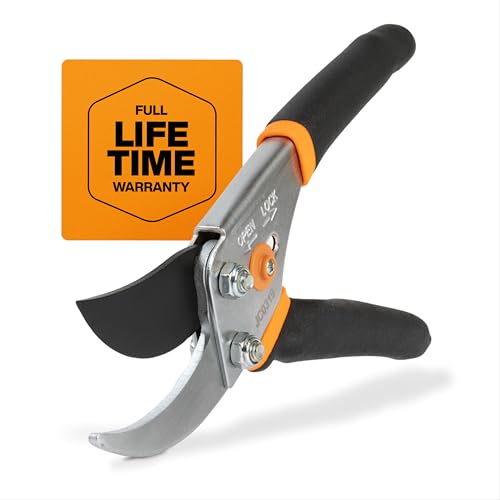
As an affiliate, junecity.studio may earn from qualifying purchases at no additional cost to you.
Keep growing
Suggested reading

Picking Fresh Pears Straight From My Tree! 🍐
Experience the joy of harvesting fresh pears directly from your own tree in Connecticut. This guide shares tips on how to successfully pick and enjoy your homegrown pears.
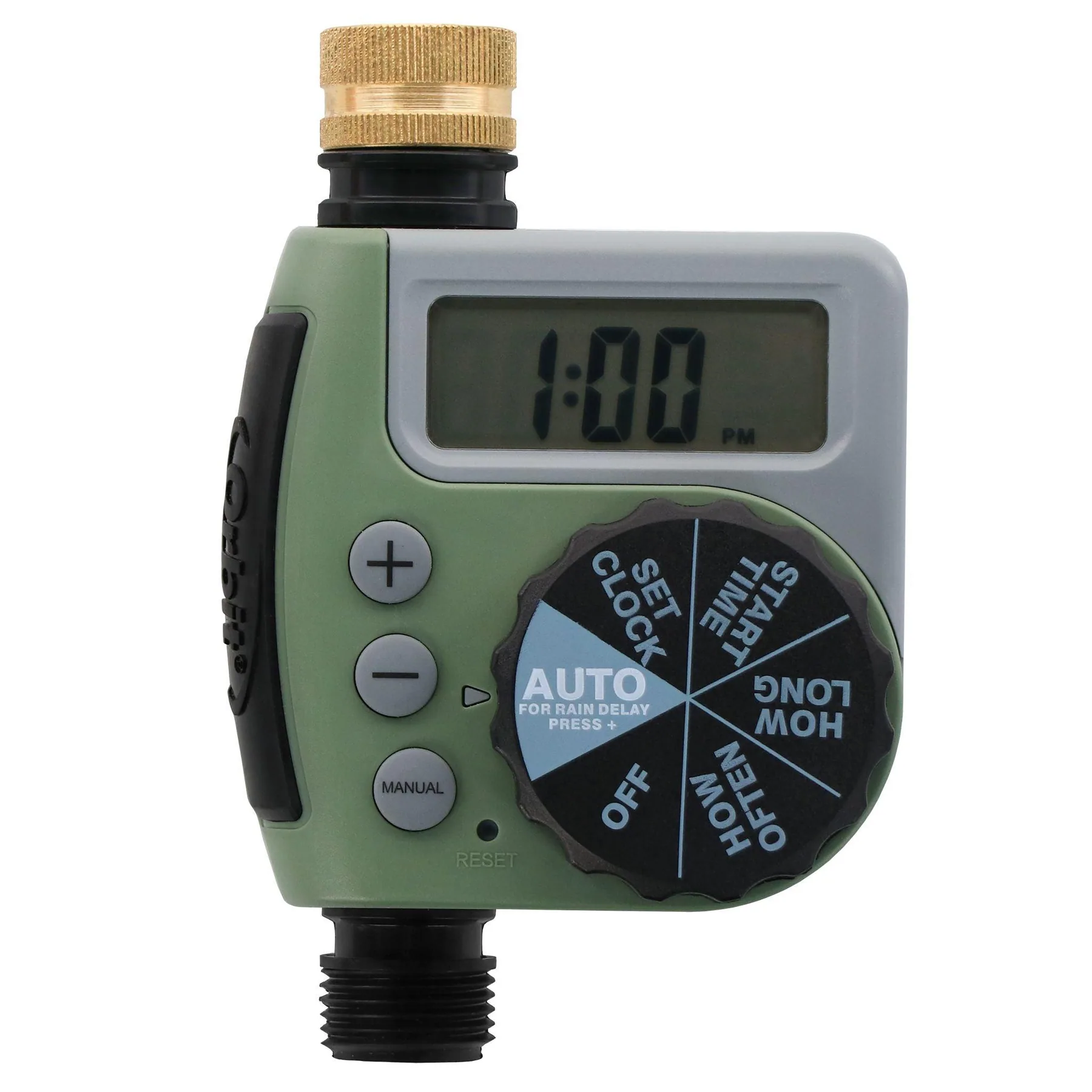
How to Automate Your Garden Watering Without an Expensive Irrigation System
Automate garden watering with a hose timer and drip tubing — a beginner-friendly setup for raised beds, containers, fruit trees, and greenhouses.
0 comments
Comments (0)
We love hearing from our community. Share your thoughts, questions, or experience.
Have something to add?
Log in to post, react, share images, and join threads.
Newest First
All Comments
Showing 0-0 of 0
Start the conversation.
Questions and first-hand experience are welcome here.