
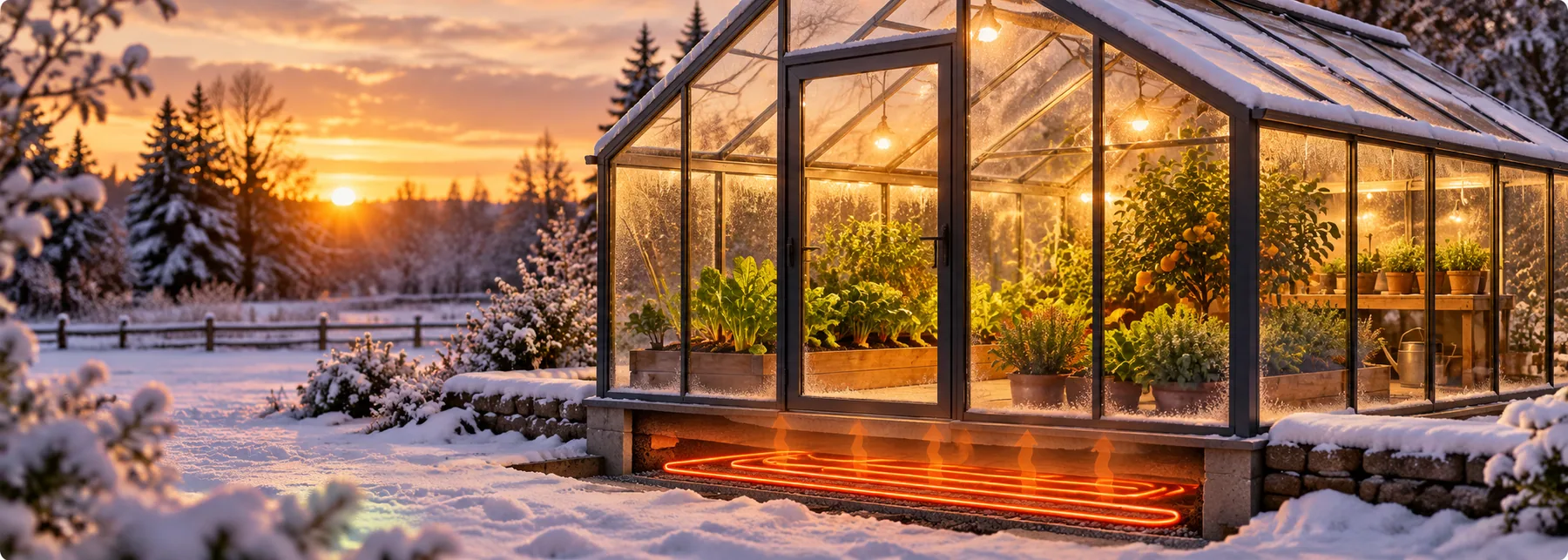
Greenhouse
How to Heat a Greenhouse in Winter Without Breaking the Bank
A practical, budget-conscious guide to reducing heat loss, choosing the right heat source, moving warmth efficiently, and monitoring a greenhouse through a Connecticut winter.
Shop This Project
Products selected from the existing Junecity affiliate catalog.
This article contains affiliate links. junecity.studio may earn from qualifying purchases at no additional cost to you.

Amazon product
VEVOR Greenhouse Heater with Thermostat, 1500W PTC Fast Heating with Overheat Protection, 3-Speed Setting Small Grow Tent Heater, Electric Portable Heater Fan for Green House, Flower Room, Workplace
View on Amazon
Amazon product
Frost King P1025/6W Polyethylene Sheeting, 10' x 25' x 6 mil., Clear
View on Amazon
Amazon product
Govee Smart Thermometer Hygrometer, WiFi Humidity Temperature Sensor with App Notification Alert, 2 Years Free Data Storage Export, Wireless Remote Monitor for Room Greenhouse Incubator Wine Cellar
View Product
Amazon product
American Bubble Boy Small Plus Bubble, 700 Square feet, 12" Wide, Perforated Every 12", Original Grade
View Product
Amazon product
Mr. Heater 30,000 BTU Vent Free Blue Flame Natural Gas Heater
View ProductHeating a greenhouse affordably starts with controlling heat loss, not simply buying the biggest heater. In Connecticut, a clear cold night can pull warmth through glazing, gaps, doors, and exposed soil much faster than many growers expect.
This guide walks through the order I use when thinking about winter protection: tighten the structure, calculate the real temperature goal, choose a safe heat source, move the warmth where plants need it, and verify conditions with actual measurements. Product links are optional tools from the existing Junecity catalog, not a substitute for a site-specific load calculation or professional gas and electrical work.
Watch the complete series
Greenhouse Heating
8 parts series on greenhouse heating
Stop avoidable heat loss first

Seal obvious air leaks around doors, vents, glazing joints, and service penetrations. Add an interior insulating layer only where it can be installed without blocking required ventilation, exits, or combustion clearances.
Watch for: Never cover a heater, flue, electrical equipment, or required fresh-air opening.
Set a realistic indoor target and estimate the load
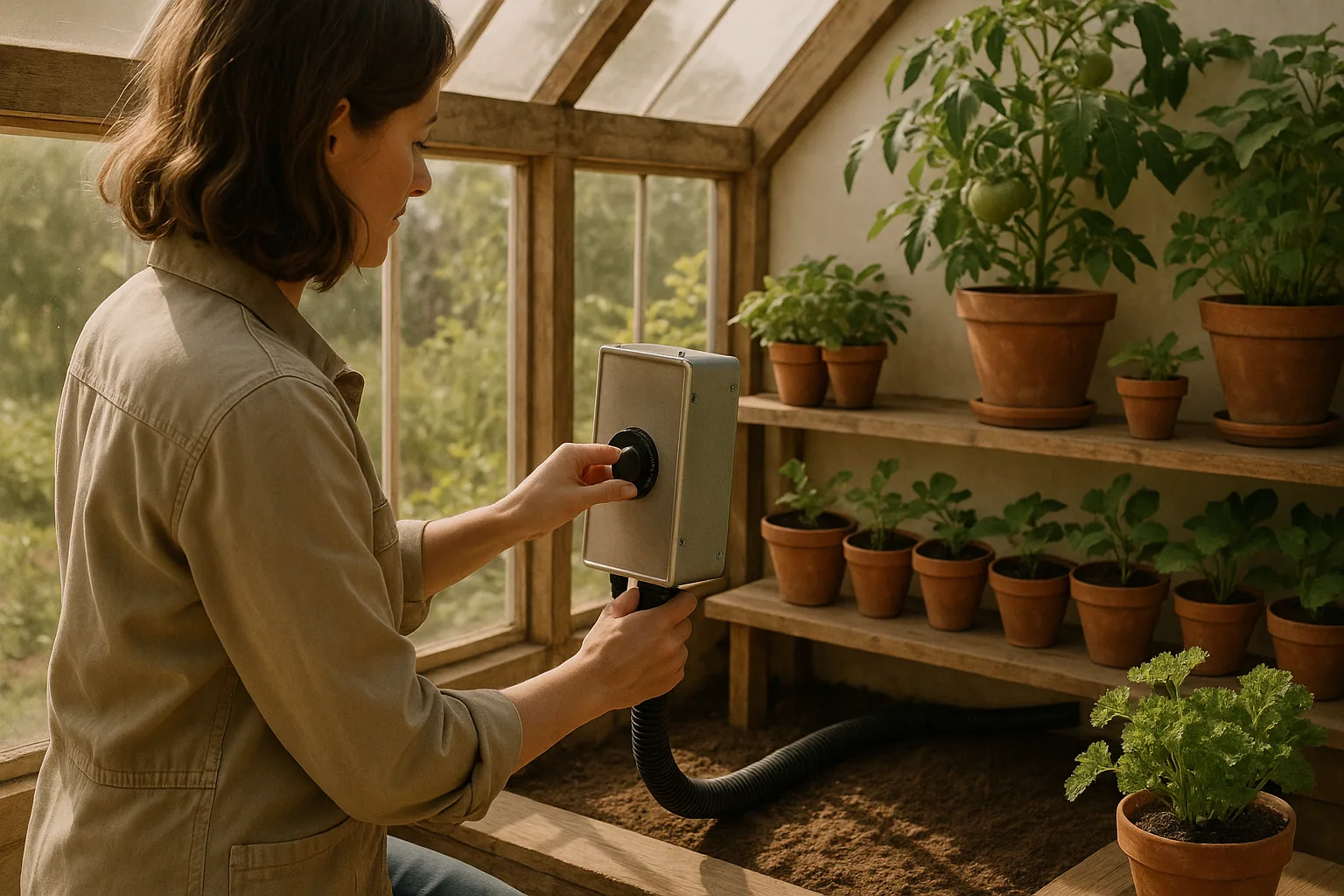
A tropical collection, dormant hardy plants, and cool-season greens do not need the same minimum temperature. Use the coldest expected outdoor temperature, the desired indoor minimum, the exposed surface area, glazing type, and air leakage to estimate heat loss.
Choose a safe, serviceable heat source
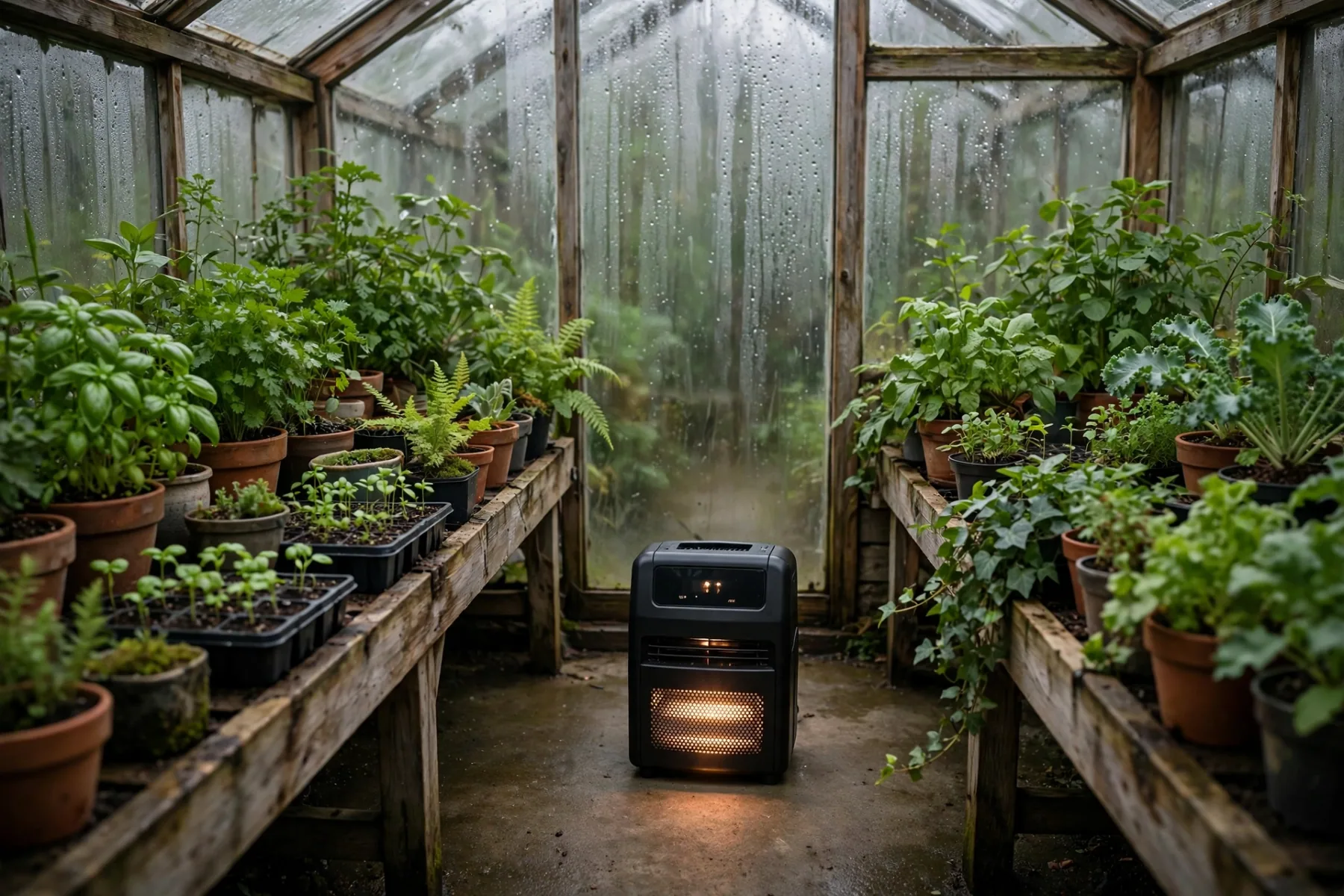
Match the verified load to equipment approved for the location and fuel. Electric heaters simplify combustion concerns but may be limited by circuit capacity. Fuel-burning equipment needs correct clearances, ventilation, carbon-monoxide protection, and professional installation.
Move the heat and monitor the cold spots
Gentle air movement reduces hot ceilings and cold corners. Place sensors near plant height and at the coldest edges, not directly in the heater stream. Review overnight minimums after every major weather change.
Choose the Right Heating Strategy
The best affordable approach is often a combination rather than one piece of equipment.
Retention before output
Air sealing, inner film, frost cloth, and nighttime curtains reduce the amount of heat equipment must replace.
Protect a smaller zone
A low tunnel or insulated plant zone can be more practical than holding the entire greenhouse at a tropical temperature.
Controlled supplemental heat
A thermostat and independent temperature sensor help equipment run only when the measured temperature requires it.
What “Affordable” Really Means
The cheapest heater is not always the lowest-cost system. Installation, electricity or fuel, ventilation, maintenance, backup protection, and heat escaping through the structure all matter. Compare total seasonal cost and safety requirements, then make one measured change at a time.
Junecity’s existing greenhouse heating series shows the real system components and calculations in more detail. The water-side BTU figure discussed there is an estimate from flow and temperature difference; it is not a certified delivered heater-output rating.
Explore more practical greenhouse projects
See Junecity greenhouse builds, videos, and tested project ideas.
Browse greenhouse guidesFrequently Asked Questions
What temperature should I keep a greenhouse in winter?
It depends on the crops and whether the goal is active growth, frost protection, or dormancy. Use the minimum safe temperature for the most sensitive plants in the protected zone rather than choosing one universal setpoint.
Is an electric heater the cheapest greenhouse heater?
Not always. Equipment cost can be low, but seasonal operating cost depends on electricity rates, heat loss, outdoor temperature, and run time. Circuit capacity and wet-location safety also matter.
Does greenhouse bubble insulation reduce heat loss?
An interior insulating layer can reduce heat transfer when correctly installed, but it must not block ventilation, exits, equipment clearances, or safe operation. Performance varies with the material and installation.
Do I need backup heat?
If a freeze could kill valuable plants, plan for power, fuel, thermostat, or equipment failure. A low-temperature alert, a safe backup method, and an emergency plant-moving plan are more reliable than a single heater.
 How I Heat My Greenhouse Floor in Connecticut 🔥
 Picking Fresh Pears Straight From My Tree! 🍐
 I Grew This Apple Tree From Seed… Then Grafted Yellow Delicious Onto It 🍎
 Growing Pink Guava in Connecticut! 😳
0 comments
Comments (0)
We love hearing from our community. Share your thoughts, questions, or experience.
Have something to add?
Log in to post, react, share images, and join threads.
Newest First
All Comments
Showing 0-0 of 0
Start the conversation.
Questions and first-hand experience are welcome here.